Why Frequent Breaker Trips Could Signal Limited Panel Capacity
When a circuit breaker trips, it is doing exactly what it was designed to do: interrupt power before wires overheat and cause a fire. But if trips are becoming a regular event in your home, the breaker may not be the real problem. The nuisance could point to something larger: an electrical panel that no longer has the capacity to handle what you are asking of it.
Most homeowners first notice the issue in small ways. The microwave and toaster cannot run at the same time without throwing the kitchen breaker. The lights dim when the refrigerator compressor kicks on. The portable heater in the bedroom shares a circuit with the computer, and one of them loses power every evening. These are not just quirks of an older house. They are signals that the electrical load on a circuit is bumping against its limit.
What a breaker trip actually tells you
A standard residential breaker is rated for a specific amperage, most commonly 15 or 20 amps in modern homes. When the total current draw on that circuit exceeds the rating, the breaker opens the circuit. That is a safety response, not a failure. The problem arises when that response becomes routine. If you are resetting breakers weekly or daily, you are either overloading individual circuits or the entire panel is underpowered for your current needs.
The distinction matters. An overloaded circuit can sometimes be fixed by moving appliances to different outlets or adding a dedicated circuit for a high-draw device like a microwave or a home office setup. But when multiple circuits trip at different times, or when the main breaker itself trips, the issue moves beyond individual circuits. That is a sign that the total electrical service coming into the house is not enough.
How panel capacity works
The main electrical panel is the distribution center for everything in your home. It receives power from the utility, passes it through a main breaker that sets the maximum draw for the whole house, and then splits that power into individual branch circuits. The panel has a rated capacity, usually expressed in amps. A typical older home might have a 100-amp service, while newer homes often have 200 amps or more.
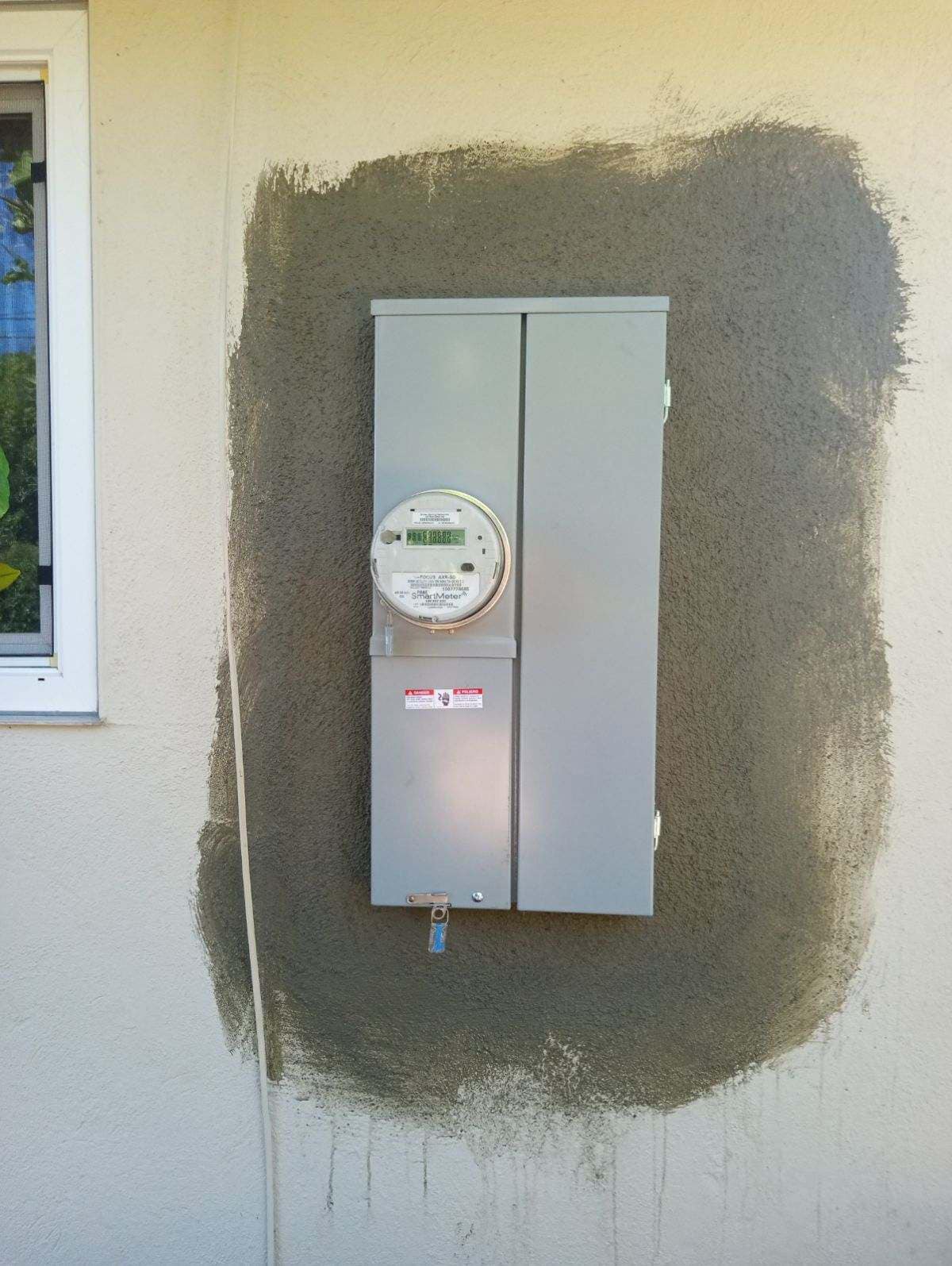
The capacity of the panel matters because it sets a ceiling on how much electricity you can use at once. If your home was built forty years ago, the original load calculation probably assumed a handful of lights, a refrigerator, a television, and maybe a window air conditioner. Today, that same home might have a home office with two computers and monitors, a modern kitchen with multiple appliances running simultaneously, a heat pump for heating and cooling, and an electric vehicle charger in the garage. The old panel was never designed for that level of demand.
Load calculation and what it reveals
An electrician can perform a load calculation that adds up the expected draw of every device, appliance, and fixture in the home. The result tells you how much capacity you are using and how much remains. If the calculation shows that your home is consistently drawing near or above the panel's rating, you are operating in a risky zone. Breakers will trip more often, wires can run hotter than they should, and the panel itself may become a bottleneck that prevents you from adding new equipment.
Load calculations are not guesswork. They follow a standard method that accounts for both continuous loads, like lighting and refrigeration, and intermittent loads, like a clothes dryer or an air conditioner. The result gives a realistic picture of what your panel can and cannot do. If the calculation shows that you are close to the limit, frequent breaker trips are not a nuisance to be tolerated. They are a warning that the panel is being pushed beyond its intended capacity.
Common triggers for capacity issues
Several modern additions to a home tend to push an older panel past its limits. An electric vehicle charger is one of the most demanding. A Level 2 charger can draw 30 to 50 amps on its own, which is more than some older panels can spare for a single device. A heat pump, which replaces a gas furnace and air conditioner with an all-electric system, also adds a large continuous load. Even smaller changes, like a home gym with a treadmill and a television on the same circuit, can create a situation where the breaker trips every time someone runs at full speed.
When these loads are added one at a time, the cumulative effect is easy to overlook. The panel still looks the same. The breakers still flip on and off. But the trips become more frequent, and the pattern is the real clue.
What a residential panel upgrade involves
If your panel is no longer keeping up, the practical solution is often a residential panel upgrade. This means replacing the existing panel with one that has a higher rated capacity and more circuits. A larger main breaker allows more total current into the house, and additional breaker slots let you separate loads that are currently sharing circuits. That alone can solve the nuisance tripping problem because each circuit has more room to operate within its rating.

A residential panel upgrade is not a minor repair. It involves disconnecting the old panel, installing a new one, and reconnecting every circuit. The work requires a permit and an inspection in most areas. The electrician will also check the wiring from the utility connection to the panel, because a larger service sometimes needs heavier gauge wire. The result is a system that can handle the loads you actually use, not just the loads that were common when the house was built.
Subpanels and dedicated circuits as alternatives
Not every capacity problem requires a full panel replacement. In some homes, adding a subpanel can provide extra circuits without changing the main panel. A subpanel is a smaller secondary panel fed by a dedicated breaker in the main panel. It is useful when you need to add circuits in a garage, a workshop, or an addition. But a subpanel does not increase the total capacity coming into the house. It only distributes existing capacity more flexibly.
Another targeted fix is a dedicated circuit for a single high-draw device. An electric vehicle charger, a heat pump, or a large air conditioner can each get its own circuit. That keeps those loads from interfering with the rest of the house. Dedicated circuits are a clean solution when the main panel still has enough total capacity and the problem is just a crowded branch circuit.
When to consider an upgrade
The decision to upgrade comes down to a few clear signs. If the main breaker trips, that is the strongest indicator that the entire service is overloaded. If you cannot add a new appliance without tripping something, that is another. If you have already rearranged appliances and moved loads between circuits but the trips continue, you have run out of room to maneuver.
An upgrade also makes sense if you plan to add more electrical equipment in the near future. An electric vehicle, a heat pump water heater, or a solar panel system all place demands on the panel. Planning for them now avoids a second upgrade later.
What a professional assessment covers
An electrician can evaluate your current panel by checking its rating, inspecting the condition of the bus bars and breakers, and performing a load calculation. They will also look at the service entrance cable and the meter socket, because those components must match the new panel's capacity. The assessment produces a clear recommendation: either the panel is adequate with some circuit rebalancing, or it needs to be replaced with a larger service.
That evaluation is worth doing early. Many homeowners live with frequent trips for years, assuming the problem is normal or that the breakers are just old and sensitive. In most cases, the breakers are fine. The real issue is that the panel is asking them to do more than they were designed for.
Frequent breaker trips are not something to ignore or work around. They are the most visible sign that your home's electrical system is under strain. Understanding what they mean can help you decide whether a simple circuit adjustment will solve the problem or whether a larger service upgrade is the right move for the long term.